
Hunting for good used cars for sale is a bit like a treasure hunt. It will take some time, you will need some clues, but at the end of your quest, you might come out with a vehicle that has fantastic value for which you paid a very low price. Need some help on your mission? Consider these pointers as you begin your search:
- There are three price levels that are used to value previously owned vehicles: a) trade-in price, which is what a dealer will give you when you trade in your car for cash or a new vehicle. This is about 20% lower than the value you will receive from a private party; b) private party, the value that you will pay if buying from an individual. This is a good baseline value; c) retail, the value a dealer will assign to the vehicle. Cars at retail value will often have undergone reconditioning and/or will have a warranty. This usually jacks up the price by 20% over the private party value.
- To value a used car, you will need six pieces of information: the year, the make, the model, the trim level, the options and the mileage. All of these make a considerable difference in the value of a car, even if you don’t think they should. For instance, different options packages result in variances of thousands of dollars on a used car. Does the car have a DVD player? A Sport Package? ABS Brakes? All of these make a sizeable difference in the car’s value. The year, make and model are not enough to get a solid number for the car’s value. You can get all of these numbers by doing research on the Vehicle Identification Number (VIN), available at low cost through several companies online.
- Once you have an accurate profile of the vehicle with the six pieces of information in step 2, you can now zero in on the condition of the vehicle. These markers are somewhat subjective, but they are used all of the time so you need to work with them. Be aware that most vehicles end up in the “Good” or “Fair” categories. Very, very few can be classified as “Excellent.” If you see that designation for a car, do some extra research to verify that lofty ranking. Here are a few short definitions of each state: a) Excellent=the car is in perfect mechanical condition, the exterior is in “showroom condition”, meaning that there are no dents, dings, no body damage whatsoever. The interior is clean and has no stains or burns. The tires match and have lots of tread left on them. b) Good=the car has a few minor mechanical and/or electrical problems. There might be some minor dings and scratches from routine wear and tear. The car is nearly rust-free and the interior shows only minor wear with slight staining on the carpets. The tires match but might not have much tread left. Most vehicles less than five years old fit into this category. c) Fair=the car has several mechanical/electrical problems but it runs and can be driven. The exterior has problems, too, and might need to be repaired by a professional. Rust might be around on the body panels, the tires might not match and they might not have much tread. Vehicles that are more than five years old and are driven daily usually fall into this bracket. Do not be too positive on the word “fair.” “Fair” can be translated “needs work.” Do you want to buy a car that needs work? d) Poor=the car has severe problems and might not run properly. The exterior is damaged and there’s lots of rust. The tires need to be replaced. Cars with a title sullied by salvage or flood will fall into this group. You should find very low prices in this category because you will need to pour some money into the car immediately to make it reliable and presentable.
- With this information at hand, you are now ready to do research on values in your area. As you log onto Kelley Blue Book or a similar site, be sure to indicate what part of the country you live in. That has an impact on the value.
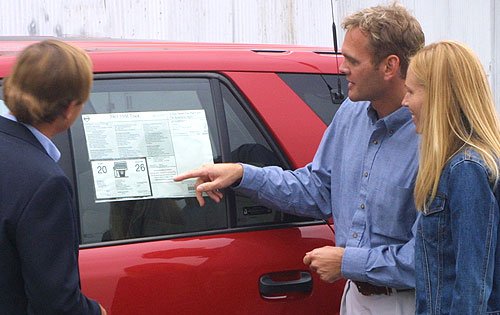
Determining the value of a used car is not rocket science, but it does require homework. In your quest, you are trying to arrive at “Fair Market Value”, an amount that will make all parties happy. Turners Car Auctions have a car valuation tool which is fairly easy to use. Before you give up thousands of your hard-earned dollars, be sure to have a thorough profile on the car you eye. When you get to the point of actual purchase, start ridiculously low and watch the reaction of the seller. If s/he is in a bind, s/he might say “okay” to a price much sooner than you anticipate.