
How to Buy a Car Through Online Auction

So, you’re ready to step up in your online deal-making and bid on bigger items. That mint condition comic book got a little pricey, as did that blender your wife has wanted forever. Well, you are about to run with the big dogs now. You are going to dive in and actually bid on used cars for sale. It’s a big leap from $40 to $4000. You’re going to need some help on this. This post is here to assist you.

Here are a few tips on buying a car through online auction, whether through Turners, TradeMe or some other online service. Good luck!

  1. As you get into the bidding process, be sure to snag the Vehicle Identification Number (VIN) of any car that interests you. You will need to run a vehicle history report on the car before you make even a single bid. These vehicle histories are CRUCIALLY important because sometimes they lead to all sorts of unique discoveries that will save you a lot of heartache in the future. Even if you really love the car that you see in the photo, you must run a history. Unfortunately, at times you will find out that the car you treasured (perfect year, perfect model, perfect color, sooo beautiful) has a history that would make Madonna blush. Floods, horrible accidents, unstable chassis—you will have to take a deep breath and abstain from bidding on any vehicles that have these problems or others. The vehicle histories will grade the car you are looking at with a red, yellow or green light. Obviously, you only want to go green in this case.
  2. You should also be aware that some sellers don’t list the VIN or they list a fake VIN. Do not proceed unless you have a definitive VIN. You can tell if the VIN is fake if it comes up as a history on a 2005 Mercedes when you are investigating a 2008 Ford. You will also need that VIN to verify the car’s engine size and other details. Some unscrupulous sellers alter those facts about their cars as well.
  3. Don’t forget that if you are the winning bidder at TradeMe, you are contractually obligated to buy the car. Therefore, don’t bid unless you are completely prepared to buy it. Your bid might win much sooner than you anticipate, and then you are stuck with a car that you only had a passing interest in. Don’t get into the bidding process unless you are dead serious about buying the car.
  4. If you do win a bid and love the car, consider setting up an arrangement with an escrow service, which sets up a trust account and the seller is not paid until you physically receive the car. You also need to set up an inspection period so that a good mechanic can take a look at the car and see if there are any serious damages or needed repairs that the seller did not tell you about. These are a few of the sticking points that result when you cannot physically look at the car.
  5. Don’t forget that you might have to travel a distance to pick up the car, or pay shipping fees that can approach $1000. In either case, figure these additional costs into your bid.

As at a physical auction, remember the old adage to bid with your brain and not your heart. You are participating in an auction because you are determined to beat the system and pay bottom dollar for the car, right? Don’t blow your good intentions by falling in love with that BMW and getting the rush that comes when you do battle with an equally determined bidder. When that other guy drops out, you’ll feel like you win a victory, but it will be a Pyrrhic victory. You will have paid more than the Blue Book value and actually acted a bit like an idiot. Don’t forget: SIGNIFICANTLY below Blue Book value or bust. Let the dum-dums get in a bidding war and drive the price up. Sellers sometimes get a group of people to lie and hype up their rating or shill bid, falsely driving up the price of a car. You need to click onto another site and sit this one out.
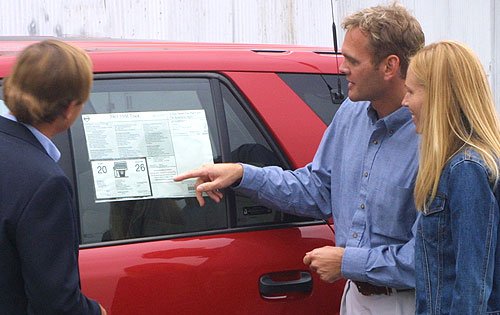
How to Value a Used Car

Hunting for good used cars for sale is a bit like a treasure hunt. It will take some time, you will need some clues, but at the end of your quest, you might come out with a vehicle that has fantastic value for which you paid a very low price. Need some help on your mission? Consider these pointers as you begin your search:

  1. There are three price levels that are used to value previously owned vehicles: a) trade-in price, which is what a dealer will give you when you trade in your car for cash or a new vehicle. This is about 20% lower than the value you will receive from a private party; b) private party, the value that you will pay if buying from an individual. This is a good baseline value; c) retail, the value a dealer will assign to the vehicle. Cars at retail value will often have undergone reconditioning and/or will have a warranty. This usually jacks up the price by 20% over the private party value.
  2. To value a used car, you will need six pieces of information: the year, the make, the model, the trim level, the options and the mileage. All of these make a considerable difference in the value of a car, even if you don’t think they should. For instance, different options packages result in variances of thousands of dollars on a used car. Does the car have a DVD player? A Sport Package? ABS Brakes? All of these make a sizeable difference in the car’s value. The year, make and model are not enough to get a solid number for the car’s value. You can get all of these numbers by doing research on the Vehicle Identification Number (VIN), available at low cost through several companies online.
  3. Once you have an accurate profile of the vehicle with the six pieces of information in step 2, you can now zero in on the condition of the vehicle. These markers are somewhat subjective, but they are used all of the time so you need to work with them. Be aware that most vehicles end up in the “Good” or “Fair” categories. Very, very few can be classified as “Excellent.” If you see that designation for a car, do some extra research to verify that lofty ranking. Here are a few short definitions of each state: a) Excellent=the car is in perfect mechanical condition, the exterior is in “showroom condition”, meaning that there are no dents, dings, no body damage whatsoever. The interior is clean and has no stains or burns. The tires match and have lots of tread left on them. b) Good=the car has a few minor mechanical and/or electrical problems. There might be some minor dings and scratches from routine wear and tear. The car is nearly rust-free and the interior shows only minor wear with slight staining on the carpets. The tires match but might not have much tread left. Most vehicles less than five years old fit into this category. c) Fair=the car has several mechanical/electrical problems but it runs and can be driven. The exterior has problems, too, and might need to be repaired by a professional. Rust might be around on the body panels, the tires might not match and they might not have much tread. Vehicles that are more than five years old and are driven daily usually fall into this bracket. Do not be too positive on the word “fair.” “Fair” can be translated “needs work.” Do you want to buy a car that needs work? d) Poor=the car has severe problems and might not run properly. The exterior is damaged and there’s lots of rust. The tires need to be replaced. Cars with a title sullied by salvage or flood will fall into this group. You should find very low prices in this category because you will need to pour some money into the car immediately to make it reliable and presentable.
  4. With this information at hand, you are now ready to do research on values in your area. As you log onto Kelley Blue Book or a similar site, be sure to indicate what part of the country you live in. That has an impact on the value.

Determining the value of a used car is not rocket science, but it does require homework. In your quest, you are trying to arrive at “Fair Market Value”, an amount that will make all parties happy. Turners Car Auctions have a car valuation tool which is fairly easy to use. Before you give up thousands of your hard-earned dollars, be sure to have a thorough profile on the car you eye. When you get to the point of actual purchase, start ridiculously low and watch the reaction of the seller. If s/he is in a bind, s/he might say “okay” to a price much sooner than you anticipate.